Russian Wooden Architecture Museum with Countryside Dwellings
Russia is a country with a diverse architecture and a fascinating culture. Traversing Russia, we discover colorful medieval structures, beautiful onion dome churches and a magnificent wooden architecture. Throughout Russia, open-air architectural museums display preserved Russian wooden monuments that have been relocated from various regions of the country. The Museum of Wooden Architecture in Suzdal is an open-air museum, a reconstructed ancient Russian settlement. The rural churches are showpieces of the Russian wooden architectural style. The Museum of Wooden Architecture in Suzdal is a notable sightseeing place, showcasing a historic Russian rural architecture and simple country living.
Russian Wooden Architecture
Russia is a country with a diverse architecture and a fascinating culture. Traversing Russia, we discover colorful medieval structures, beautiful onion dome churches and a magnificent wooden architecture. Exploring countryside of Russia, we discover wooden houses painted with vibrant colors and adorned with intricate wood carvings. Russian rural dwellings include traditional log houses, built with hand-flattened wood and large rounded logs. The log houses feature a simple design, slanted roofs and brick stoves used for heating.
Traditional countryside dwellings are architectural masterpieces that incorporate vibrant folk traditions. The Russian architectural style is a mixture of multi-tiered designs focused on aestheticism with simple wooden structures focused on functionality. The open-air architectural museums exhibit preserved Russian wooden monuments relocated from other parts of the country.
The Museum of Wooden Architecture in Suzdal
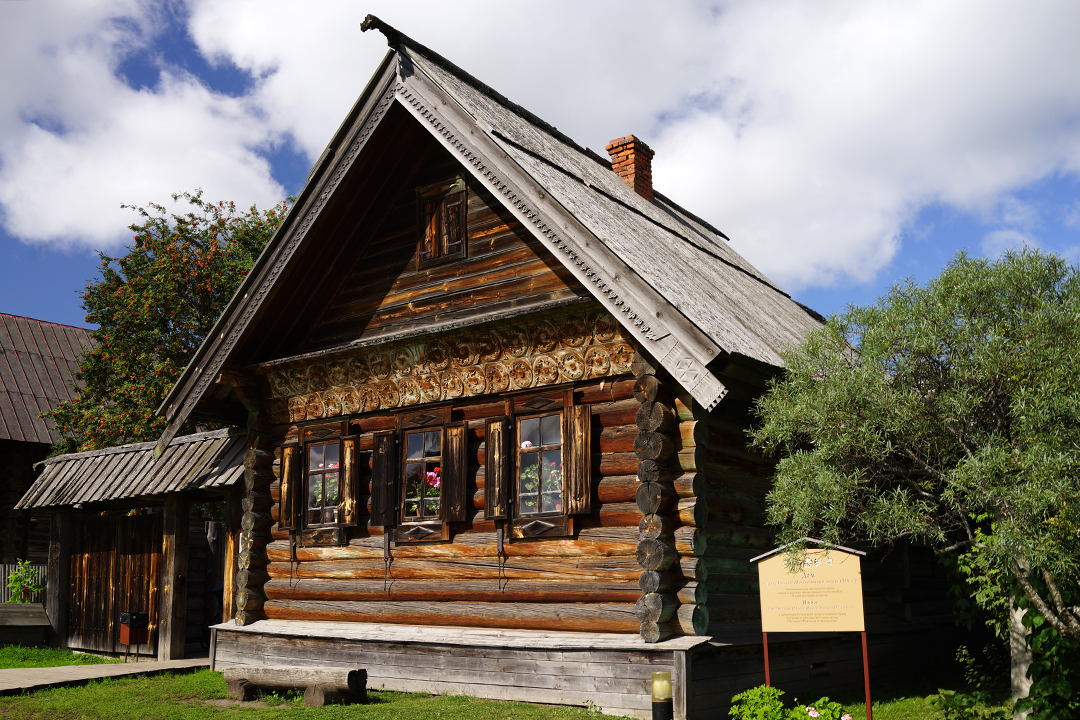
The historic city of Suzdal, located in the Vladimir Oblast, showcases a remarkable collection of religious monuments and rural wooden dwellings. The Museum of Wooden Architecture in Suzdal is an open-air museum, a reconstructed ancient Russian settlement. An expansive estate exhibits traditional wooden buildings brought from different parts of northern Russia. The one level houses with covered courtyards and storehouses were traditionally inhabited by a peasant family. The houses feature thick wooden walls, small windows and steep roofs to prevent snow from staying on the rooftops. The covered courtyards were used for the agricultural equipment and domestic animals, while granaries were used to store the grains. A 19th century wooden house brought from the village of Likino, features a wood-carved facade and interiors decorated with built-in furniture, religious icons and whitewashed stove.
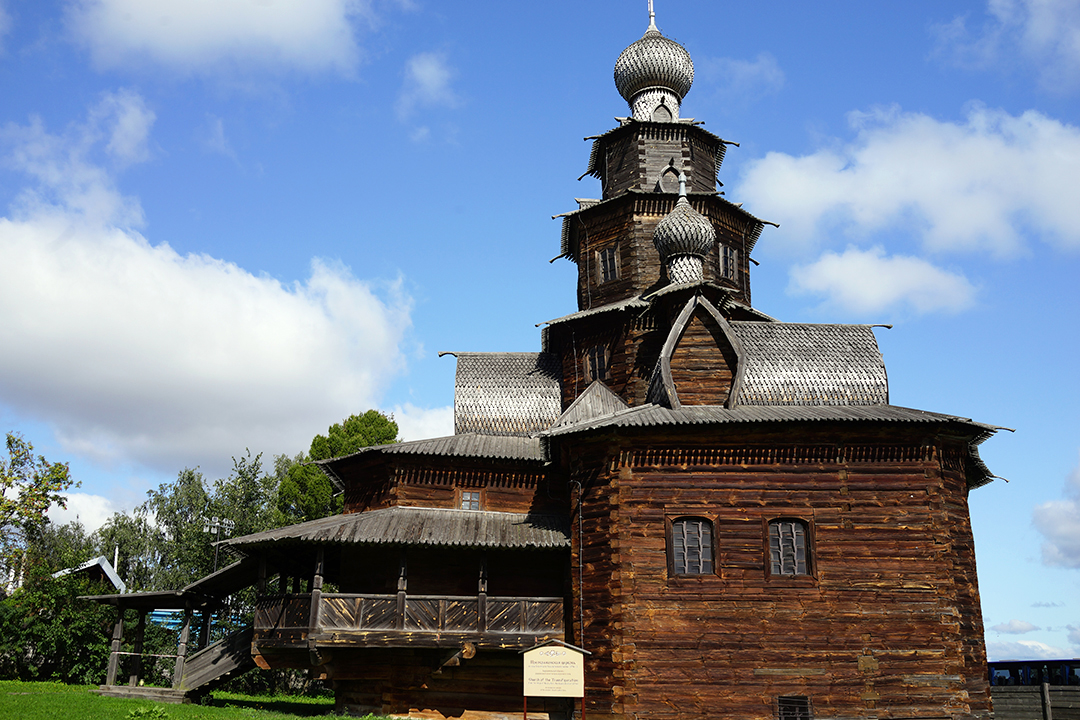
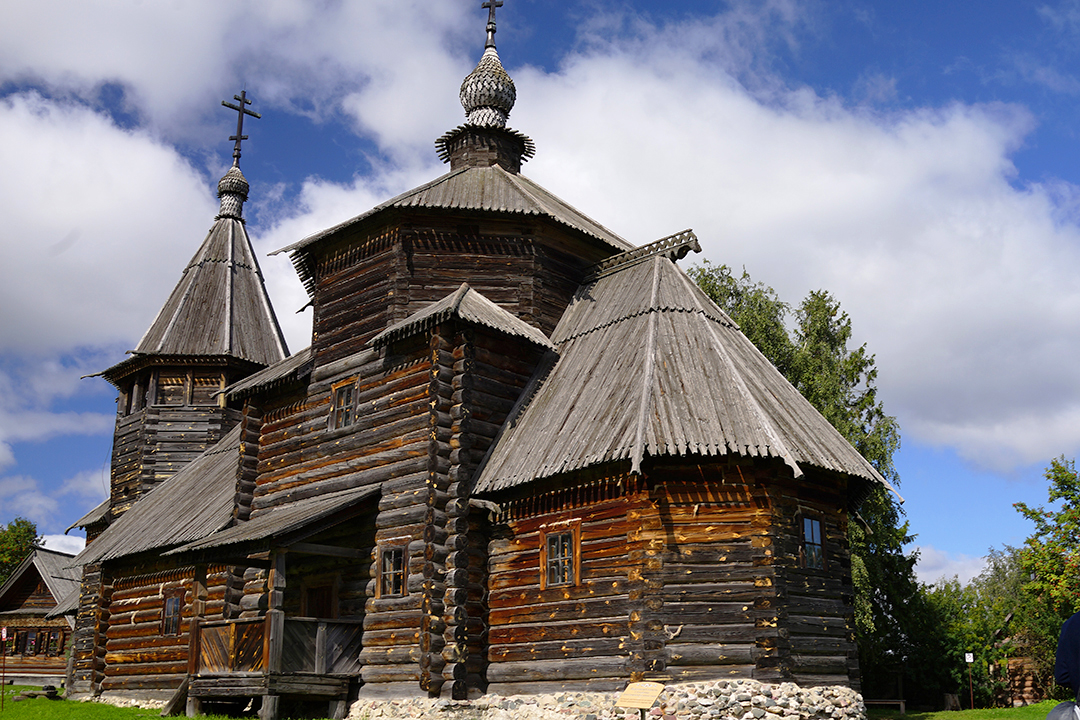
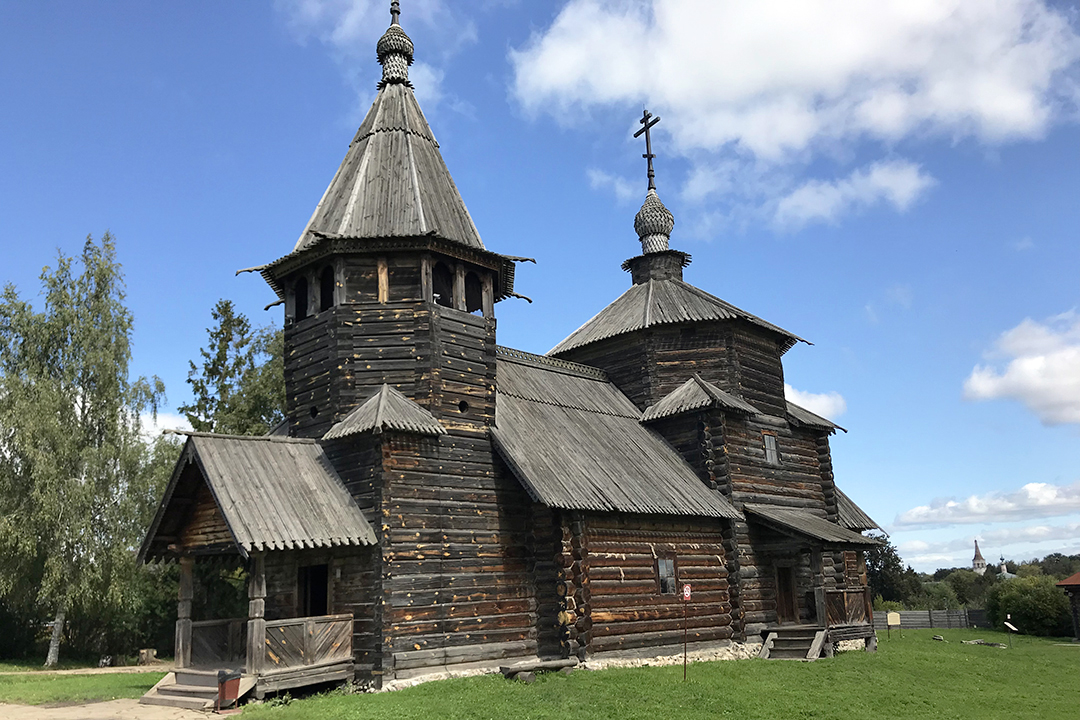
Rural churches are showpieces of the Russian wooden architectural style. The Church of the Transfiguration, an 18th century wooden church brought from the village of Kozlyatievo, showcases a multi-tiered design. The 18th century wooden Church of the Resurrection, brought from the village of Patakino, includes a refectory and a bell tower. Interiors of the church are decorated with small iconostasis; a traditional wall of icons and religious paintings displayed in Russian Orthodox churches.
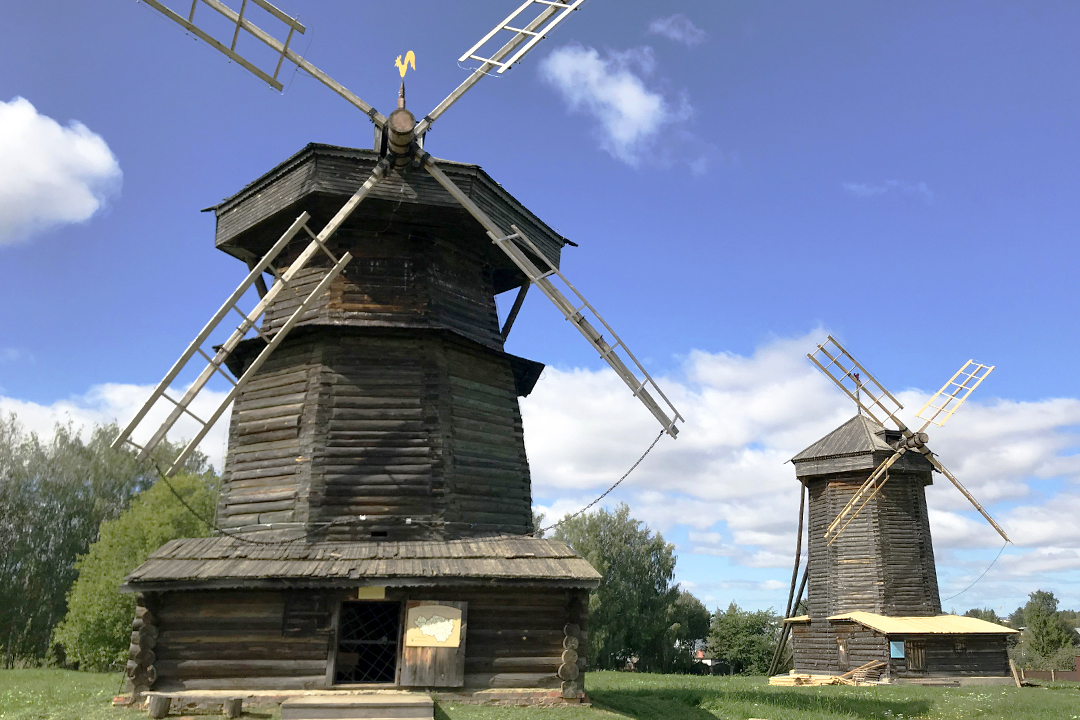
Other remarkable examples of wooden architecture are a 19th century wooden Well with a Wheel from the village of Koltsovo and a 18th century wooden Windmills from the village of Moshok. Walking in the grounds of the open-air museum, we encounter beautiful geese and admire the rural scenery. The Museum of Wooden Architecture in Suzdal is a notable sightseeing place, showcasing the historic Russian rural architecture and simple country living.