Frilandsmuseet, an Open-Air Museum in Denmark, Exhibiting Dwellings
Denmark, a country in Northern Europe, has beautiful coastlines along the North Sea and the Baltic Sea. Denmark boasts lovely seaside towns, pretty villages, pristine beaches and sand dunes. Copenhagen, the capital city of Denmark, is a popular cultural and culinary destination. Exploring the outskirts of the city, we discover majestic castles, historic landmarks and magnificent landscapes. Frilandsmuseet, an Open-Air Museum located on the outskirts of Copenhagen, preserves historical farms and illustrates Denmark’s rural life.
Denmark
Denmark, a beautiful country in Northern Europe, borders Germany, the North Sea and the Baltic Sea. The spectacular coastlines comprise islands, pristine beaches and sand dunes. Denmark’s seaside towns and pretty villages are popular tourist destinations. Copenhagen, originally a Viking fishing village, became the capital of Denmark in the 15th century. Copenhagen, situated on the Zealand Island and Amager Island, offers a collection of historic cultural places.
Copenhagen’s Old Town has a remarkable Rathaus, magnificent royal palaces and stunning harbor lined with colorful buildings and boats. Exploring the outskirts of the city, we discover majestic castles, historic landmarks and magnificent landscapes. Denmark has world-class museums, including Frilandsmuseet, an Open-Air Museum located on the outskirts of Copenhagen.
Frilandsmuseet – Open-Air Museum
Frilandsmuseet is an Open-Air Museum and part of the Danish National Museum. Frilandsmuseet exhibits a collection of original rural buildings that were moved from different regions of Denmark. The expansive estate features scenic pathways and offers horse-drawn carriage tours. The traditional rural dwellings were brought from Denmark, Faroe Islands and Schleswig-Holstein, areas that previously were part of Denmark. Exploring Frilandsmuseet, we journey in history and in a beautiful nature.
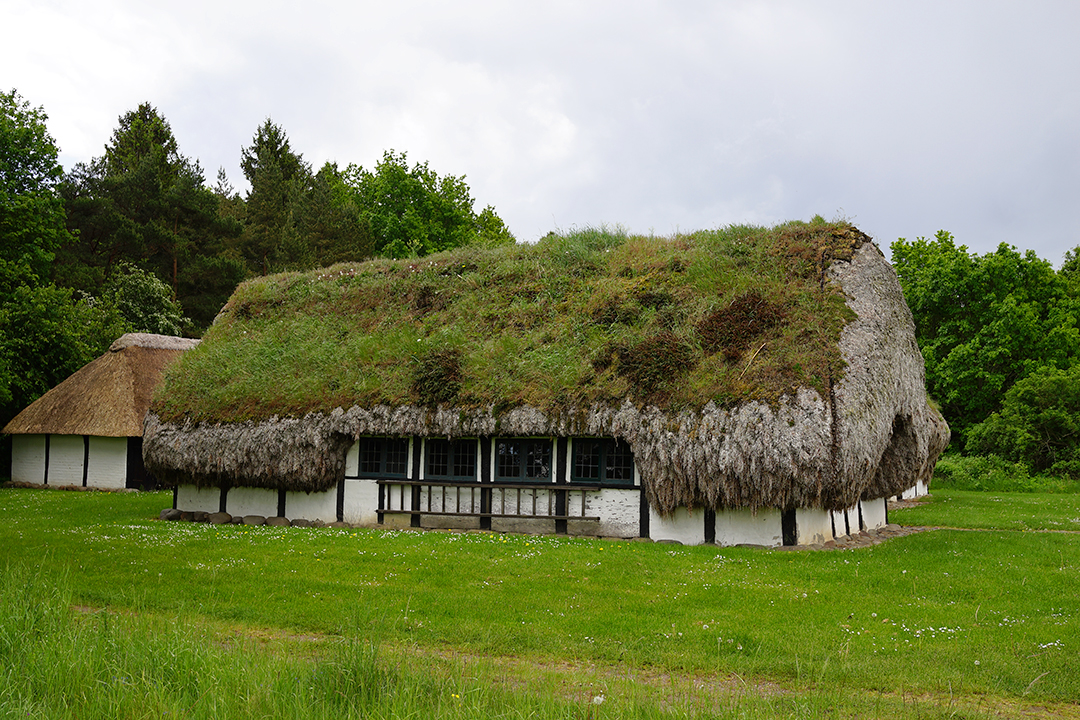
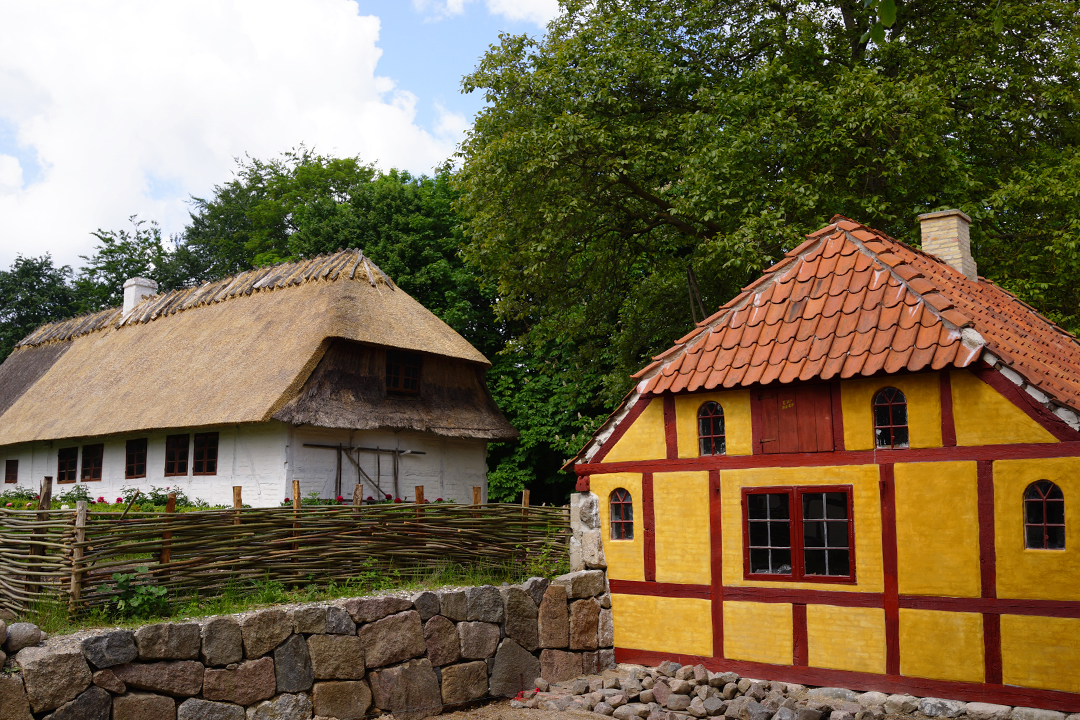
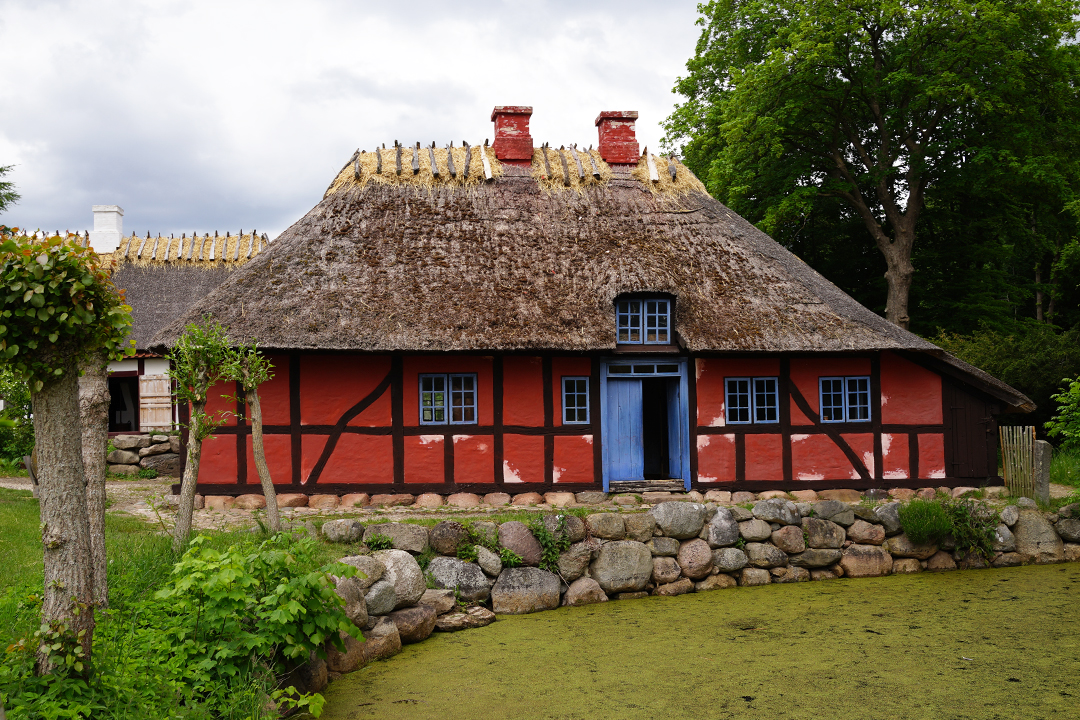
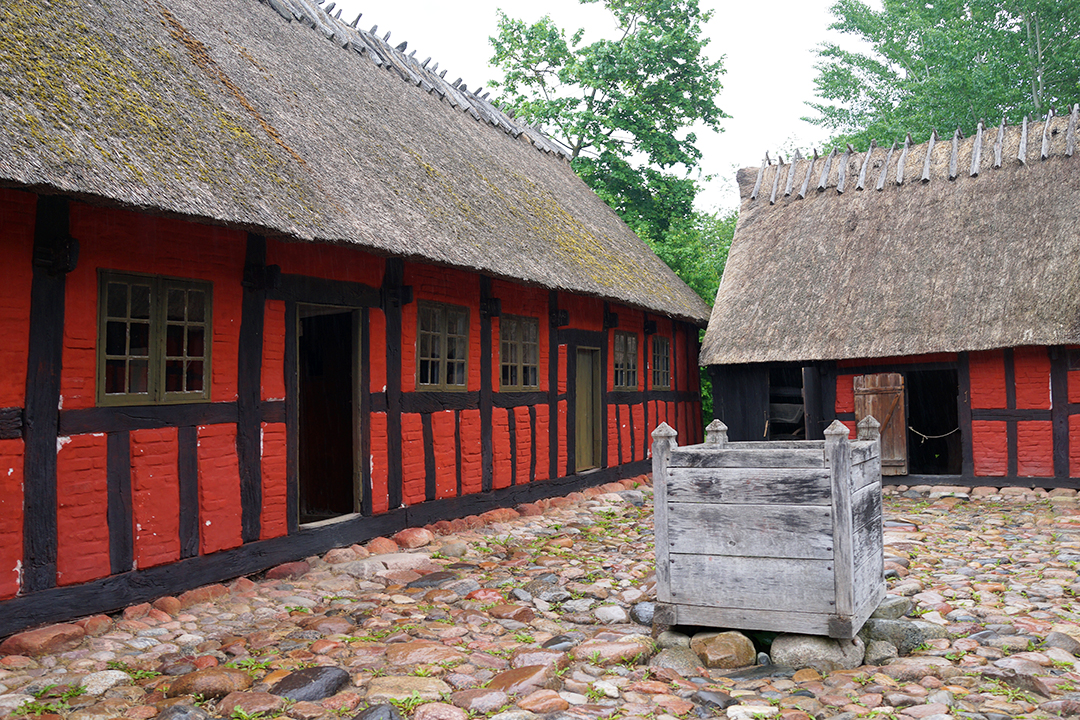
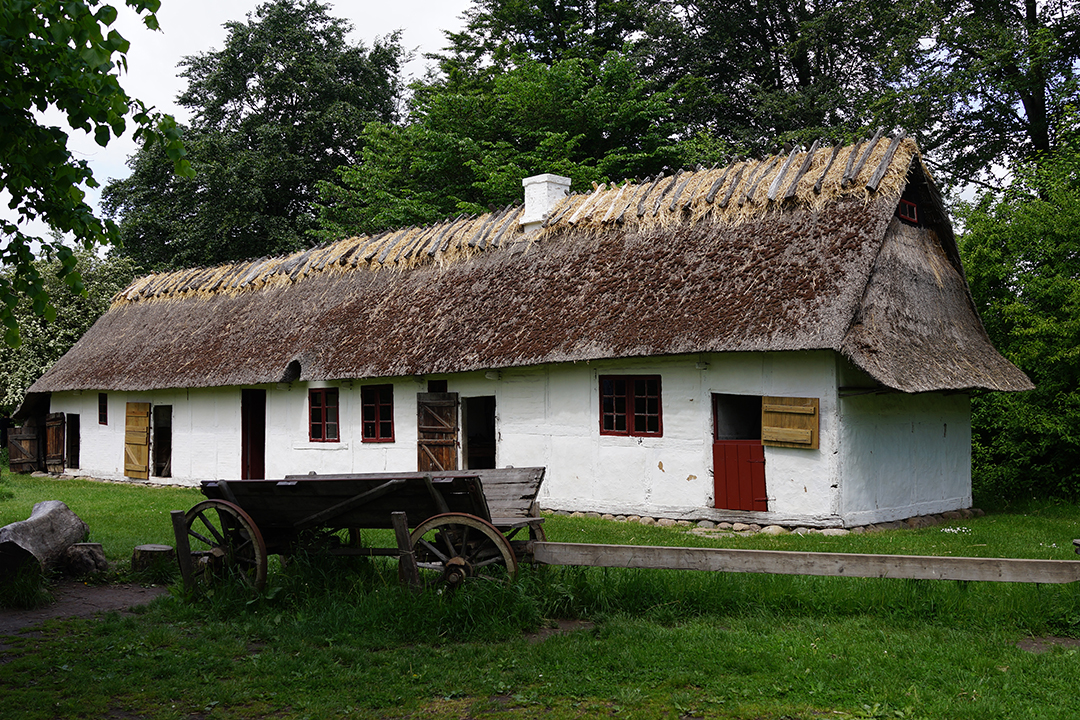
We observe 18th century farmhouses, whitewashed and half-timbered with thatched roofs. A few farmhouses are completely whitewashed and surrounded by gardens and fruit trees. A noteworthy red farmhouse adorned with wooden beams is situated along the small pond. The brick-buildings in the estate reflect an architectural style influenced by northern Germany. The Open-Air Museum displays old wooden windmills. The reconstructed Mill, previously located in the village of Karlstrup, was used to mill cereals. The expansive farmlands have a variety of livestock originating in Denmark. We observe traditional breeds of animals, including horses, sheep and goats. The Open-Air Museum preserves historical farms and illustrates Denmark’s rural life. It is a peaceful and fascinating place to explore.